An Educational Game for Architects: Making Every Choice Count
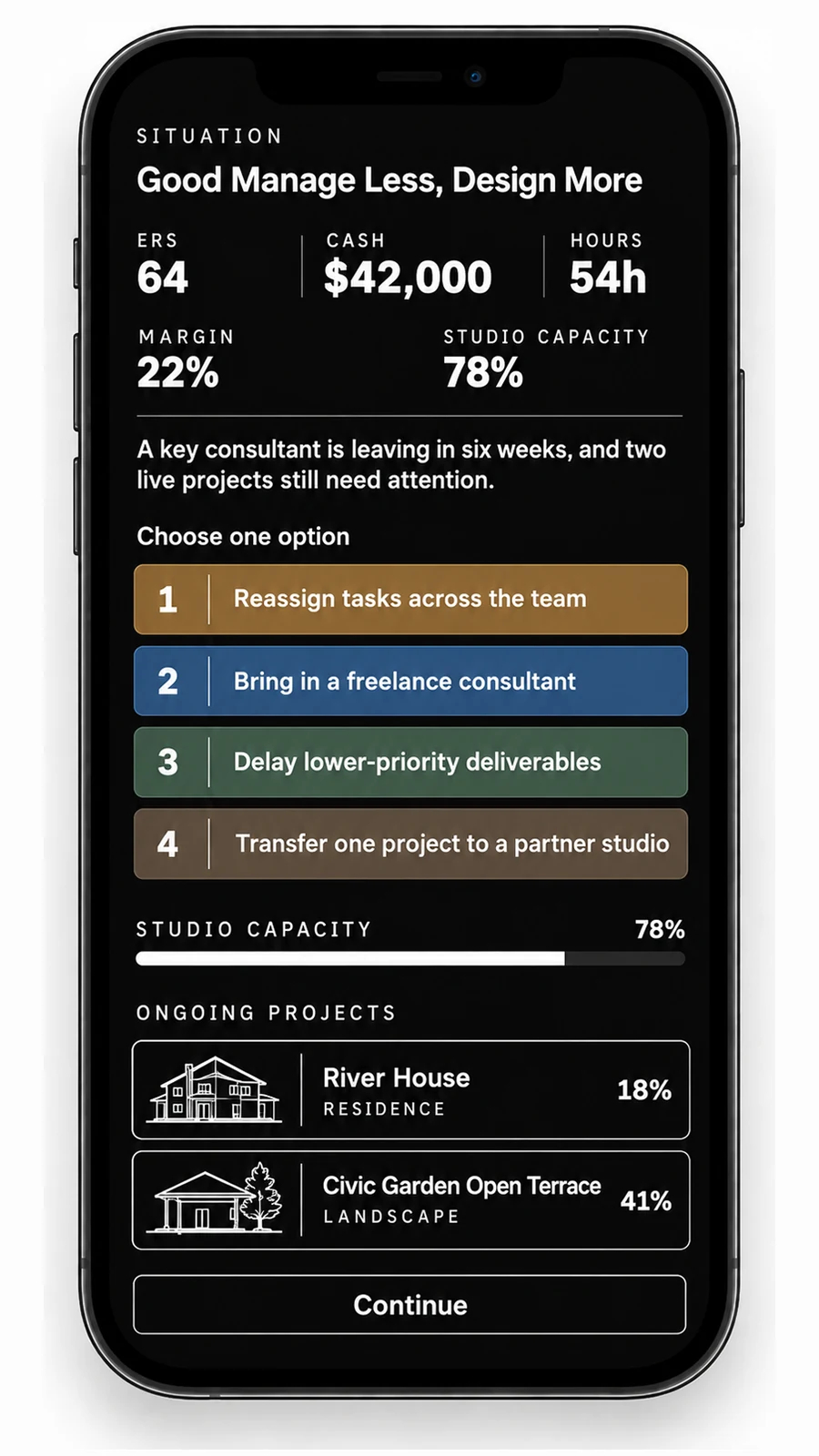
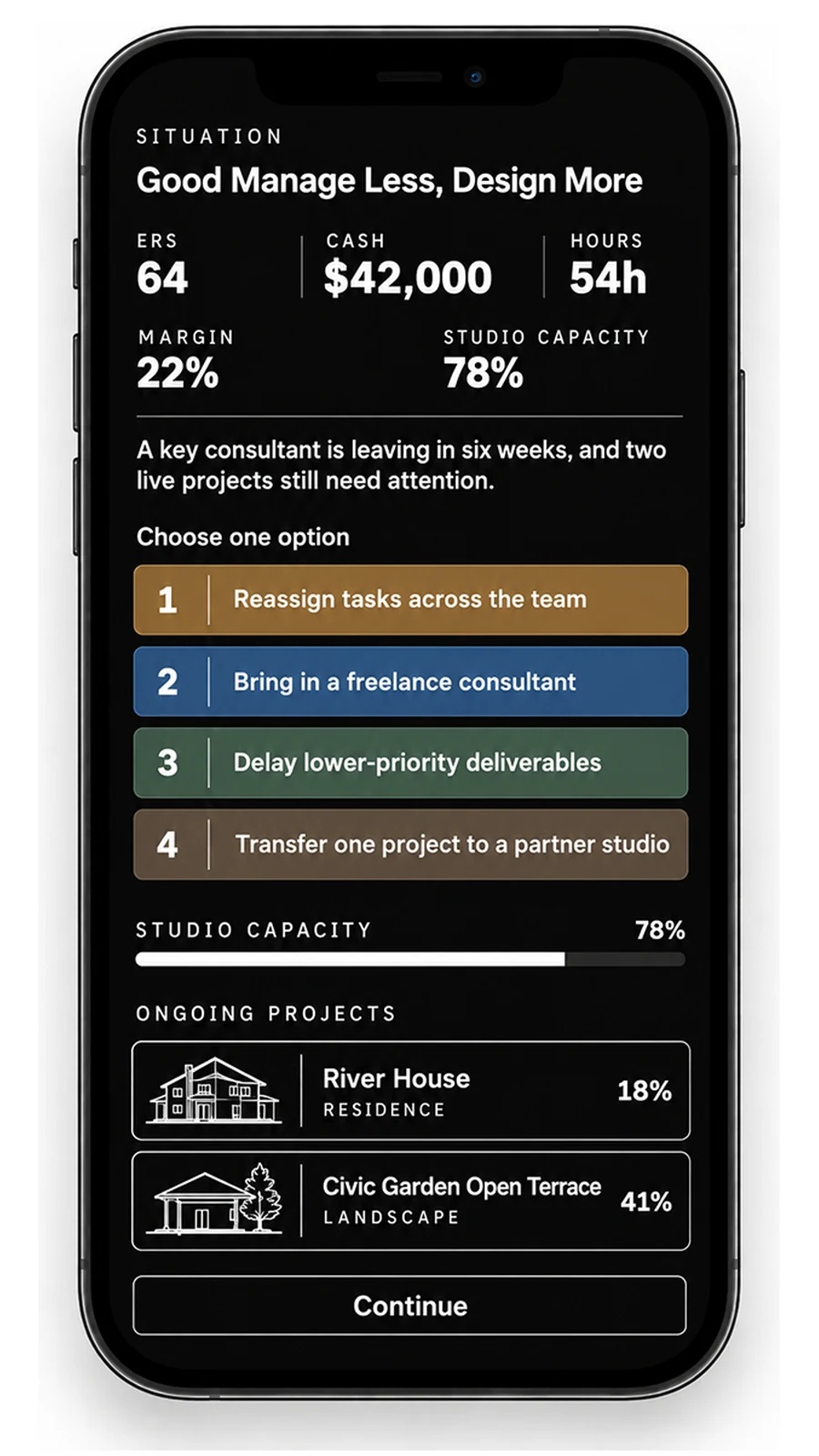
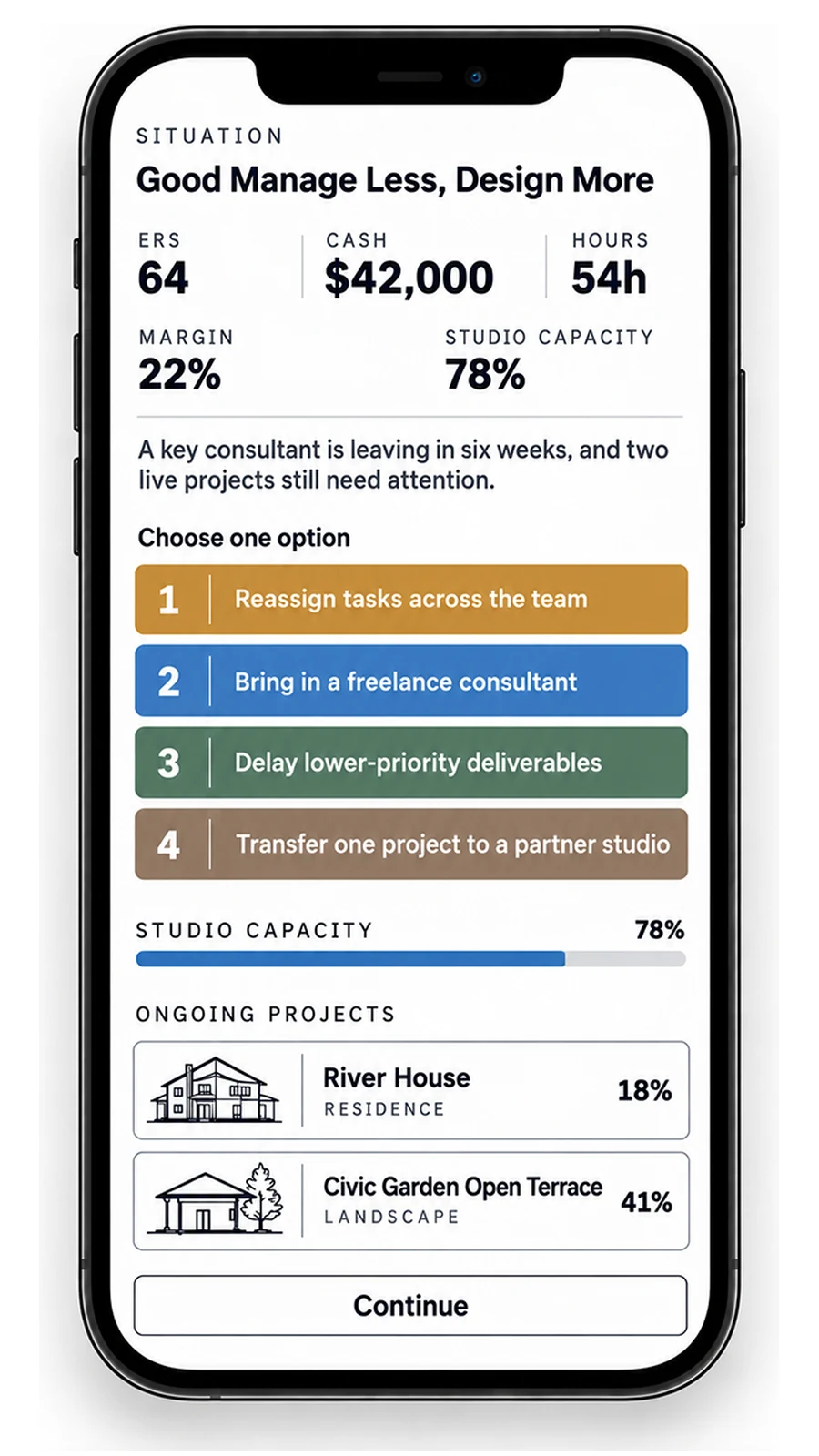
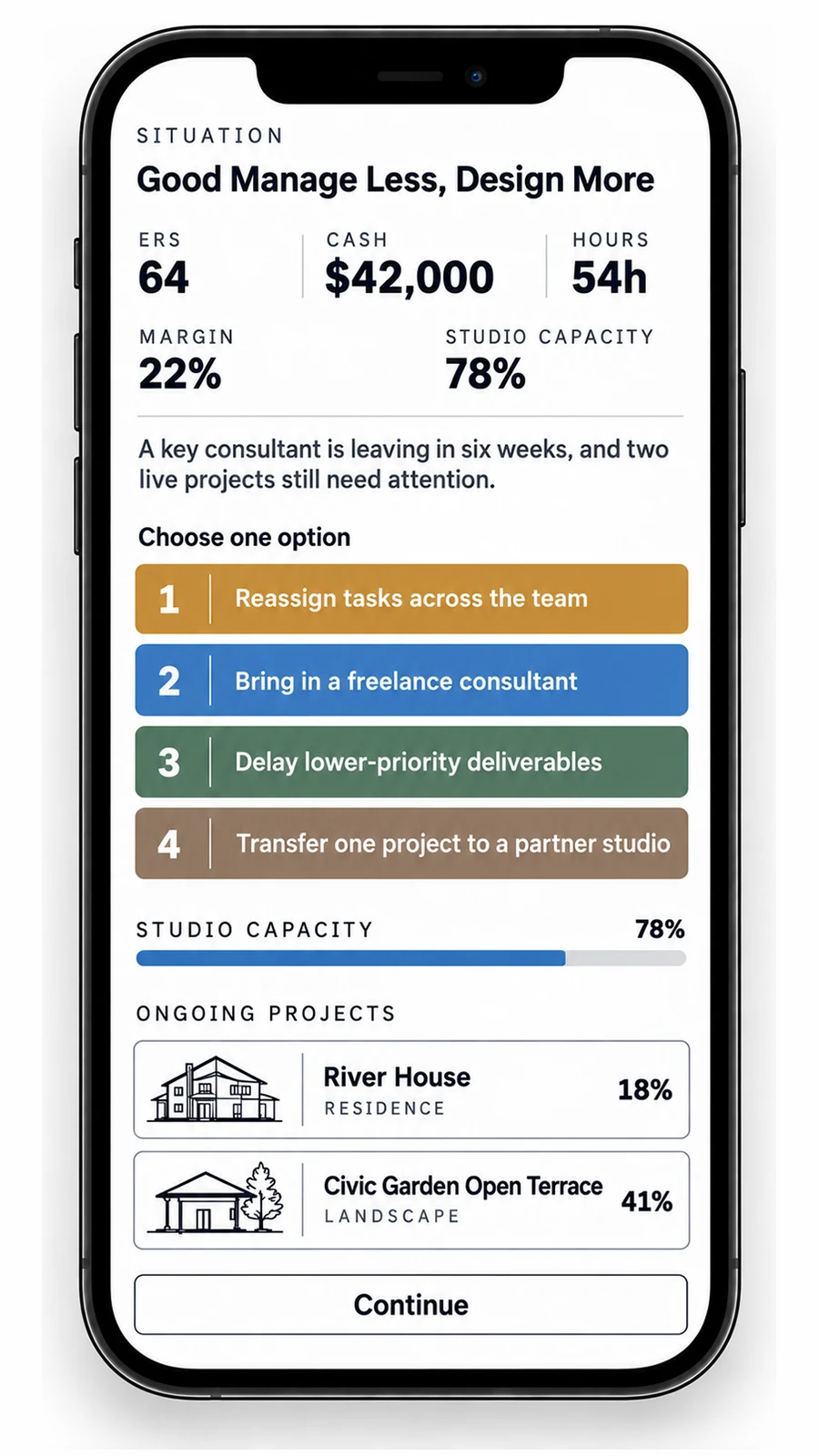
Tall phone screen with a dark interface titled Good Manage Less, Design More. A key consultant is leaving in six weeks and two live projects still need attention. The first option, reassign tasks across the team, is highlighted. Visible figures include cash of 42,000 dollars, 54 hours, a 22 percent margin and 78 percent studio capacity. 1 / 4
You chose B. The game must remember B.
Four options appear in a business situation: A, B, C and D. You consider the alternatives, choose one and continue. From the player's perspective, that should feel simple.
Behind the scenes, the selected option has to remain exactly the same throughout the game. If you choose B, the outcome, numerical effects and recorded history must all refer to that original choice.
This is the development topic I am working on in Architect High Level: preserving option identity throughout the architecture business simulation.
Why a small detail matters
Imagine selecting a response because it fits your intended studio strategy. Later, the game records a different option or attaches another option's consequence to your decision.
Even if the screen looks correct, the learning experience has broken down. You cannot meaningfully review your reasoning when the result belongs to a choice you never made.
An educational game for architects needs more than interesting scenarios. It needs a reliable connection between what the player selected and what the simulation records. Otherwise, reflection becomes guesswork.
Following the choice through the game
The current work follows each original option from the situation where it first appears through the committed decision and outcome resolution. That identity also needs to remain consistent in numerical effects, history and ledgers.
Saving the game cannot break the connection. Loading it again or returning to a situation should preserve the same original selection.
These are technical checks, but their purpose is practical. The player should be able to focus on business decisions without wondering whether the game remembered them correctly.
The letters are only labels. What matters is preserving the exact response behind each label, together with its connection to the situation in which it was offered.
A foundation for learning through play
Business education for architects often begins with questions about projects, people and priorities. A simulation can turn those questions into choices that the player actively considers.
For example, imagine a fictional practice comparing several responses to a demanding client request. One approach might prioritise immediate agreement; another might begin with a discussion about scope.
The value of comparing those approaches depends on knowing which one was selected. This example illustrates the learning principle, rather than promising particular options in the current game.
With a dependable decision history, the player has a basis for asking useful questions. What was I trying to achieve? Which assumption guided me? Would I approach a similar situation differently?
Invisible work, visible meaning
I want the technical machinery to stay in the background. Clear choices and understandable consequences should take the foreground.
Architect High Level is still being developed. Tightening this connection is one step towards a game where business experimentation has a consistent record and every selected option keeps its meaning.
Visit Architect High Level and register for early access to follow the development.
Built for architects running an architecture studio, interior design practice or landscape architecture studio, where the design business has to work too.