Business Strategy for Architects: Growth, Succession and Retirement
What should your studio become?
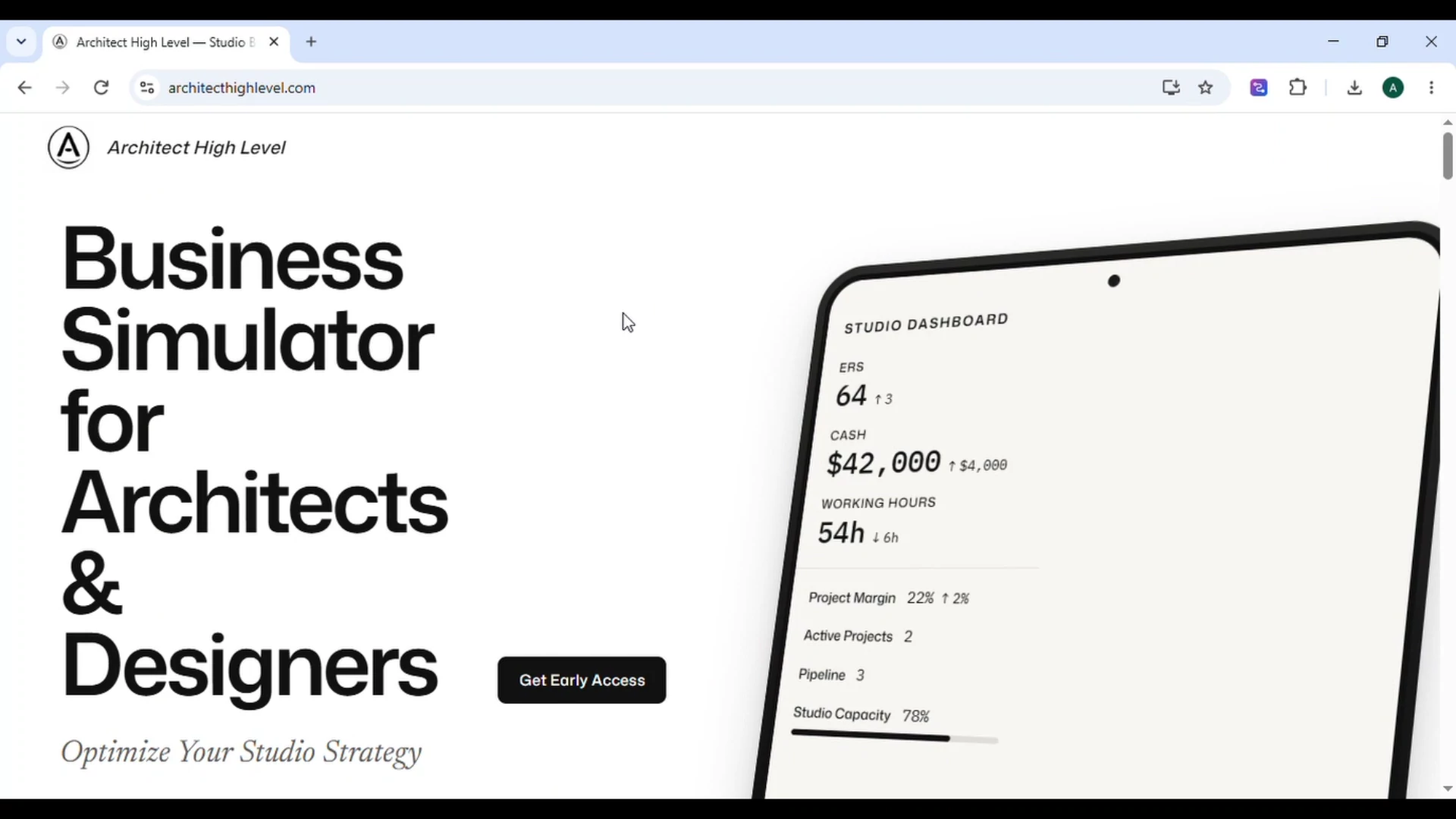
The updated Architect High Level website is live. Building it took a couple of days with Grok Build and ChatGPT, followed by a familiar cycle: correct something, write a prompt, check the result and repeat. The hardest part was keeping the design from feeling too generic.
That challenge raised a broader question for me: how do you explain a business that is still taking shape? For this project, the answer starts with the decisions architects face when thinking beyond their next commission.
Business strategy starts with direction
Running a studio involves choosing what to build as a business, alongside what to design for clients. Do you want a larger team, more time for design, a practice that depends less on you, or a structure that could eventually support succession?
These ambitions can point towards different decisions. Business strategy gives those decisions a direction. Without a clear destination, growth can become an automatic response to more enquiries, rather than a deliberate choice about the practice you want.
Architect High Level is being developed as a business simulation game for architects. The strategic questions behind the project are part of what I want the website to communicate.
Growth means asking better questions
Architecture business growth is often discussed in terms of more projects, more people or more revenue. But each proposed expansion also raises questions about capacity, responsibilities and the owner's role.
Would another project support the studio's direction? Would hiring create room for better work, or require more management time? What would need to change before a larger practice felt sustainable for the people running it?
These are useful questions for exploring studio growth strategy. They also explain my interest in simulation: creating a space where business choices and their consequences can become easier to examine.
Retirement belongs in the strategic conversation
Retirement planning for architects brings another perspective to the same discussion. If you eventually want to step back, what kind of business would you like to leave behind? Who could lead it, maintain client relationships and continue its work?
Architecture practice succession raises questions about leadership, knowledge and responsibility. It can also help frame nearer-term choices about how a studio operates today. The point here is to explore direction, rather than prescribe a particular retirement or financial plan.
These topics describe the strategic ambitions around Architect High Level. They should not be read as a list of completed game features. The product is still developing, and the website is one step in explaining its purpose more clearly.
From a website update to a longer conversation
I am not a coding expert, so seeing the updated site come together was encouraging. Now it provides a place to introduce the project and invite interested architects to follow its progress. The website will evolve alongside development.
Visit Architect High Level and register for early access.
Built for architects running an architecture studio, interior design practice or landscape architecture studio, where the design business has to work too.