Cash Flow Visibility for Architects: Seeing Trouble Before It Arrives
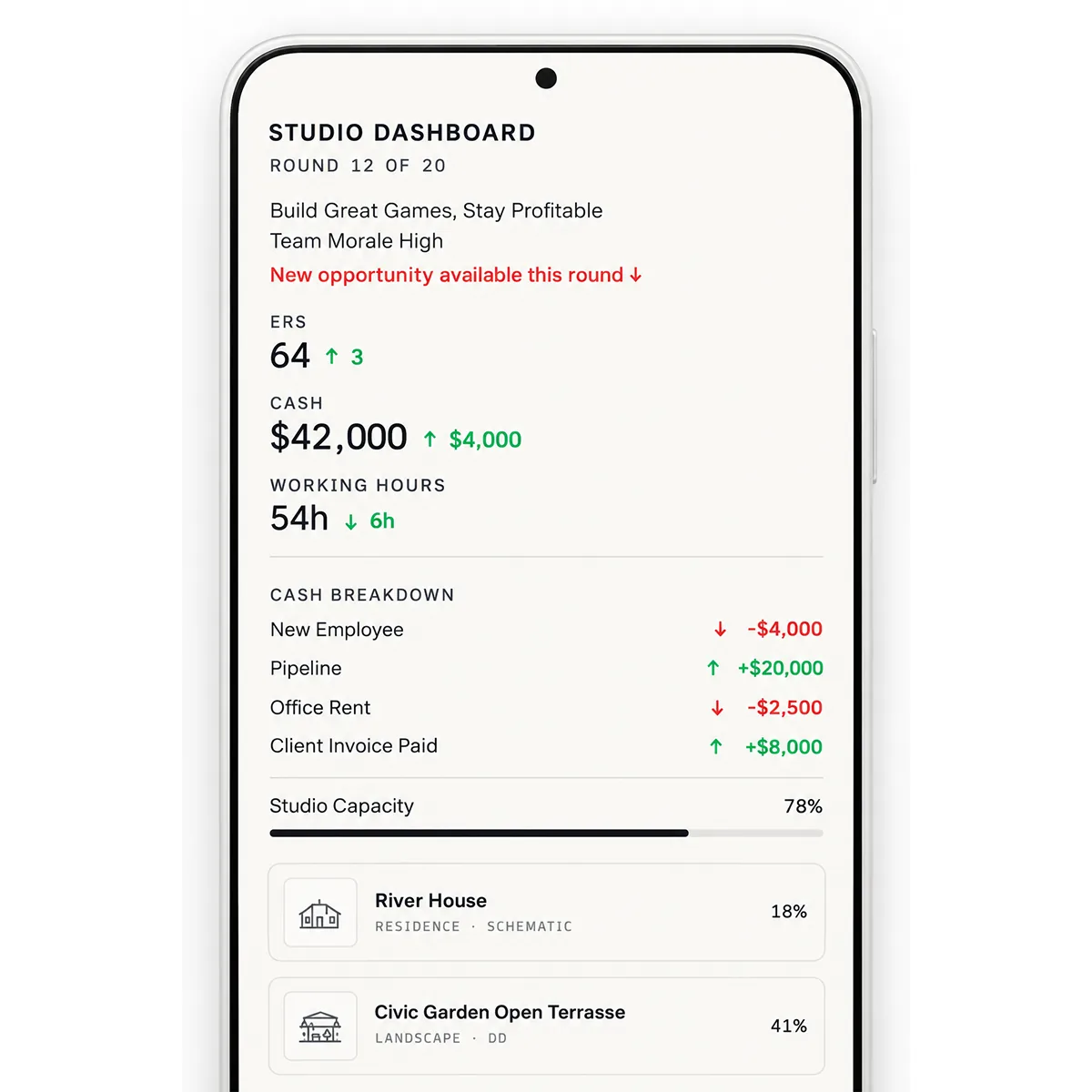
A studio can look busy and still run into cash trouble. There are projects on the desks, meetings in the calendar and people working towards deadlines. From the outside, the business appears active. Inside, the money available to keep that work moving may tell a different story.
This is one of the questions behind the development of Architect High Level: how can an educational game for architects make financial pressure visible early enough for a player to respond? I am working on the connection between business decisions and the cash position they leave behind.
A busy studio can still be under pressure
Project activity, project profitability and available cash describe different things. A commission can promise an attractive fee while payment remains some distance away. Meanwhile, the studio still has commitments to meet. Looking only at the amount of work can hide that gap.
For an architecture studio, this creates an interesting learning situation. Taking on another project may feel like progress, yet it can also require attention, time and expenditure before any payment arrives. The important question becomes: what does this decision change for the studio now?
The same underlying tension can appear in an interior design practice or a landscape architecture studio, even when the services, project stages and payment arrangements differ. The details deserve care. The shared learning goal is to connect a promising opportunity with the resources needed to deliver it.
Make the consequence visible while it matters
In a business simulation, a warning that appears only after the studio is already in trouble teaches a limited lesson. The player sees the outcome, but may struggle to understand which earlier choice created the pressure.
I want the game to make that relationship easier to follow. The development challenge is deciding what information deserves attention, when it should appear and how to communicate it without interrupting the experience.
Imagine a studio considering extra work while waiting for an existing payment. This is an illustrative situation, not a description of a finished mission. The useful learning moment is before the commitment: can the player recognise the pressure that accepting it might create?
That requires more than a number changing. The player needs enough context to connect an action with its consequence, while still having room to decide what to do next.
Learning to read the business behind the work
My aim is to make studio management understandable through play. Financial information should help the player ask better questions: what is available, what is already committed, and which decision would reduce the room to manoeuvre?
That awareness matters before more ambitious architecture business growth becomes possible. Keeping a practice operating gives its design work a chance to develop. A busy calendar alone does not explain whether that foundation is secure.
Architect High Level explores the business side of running a design practice through decisions and consequences. Cash visibility is one part of that development work.
Follow the development and register your interest in early testing at Architect High Level.