Client Management for Architects: The Cost of Unpaid Revisions
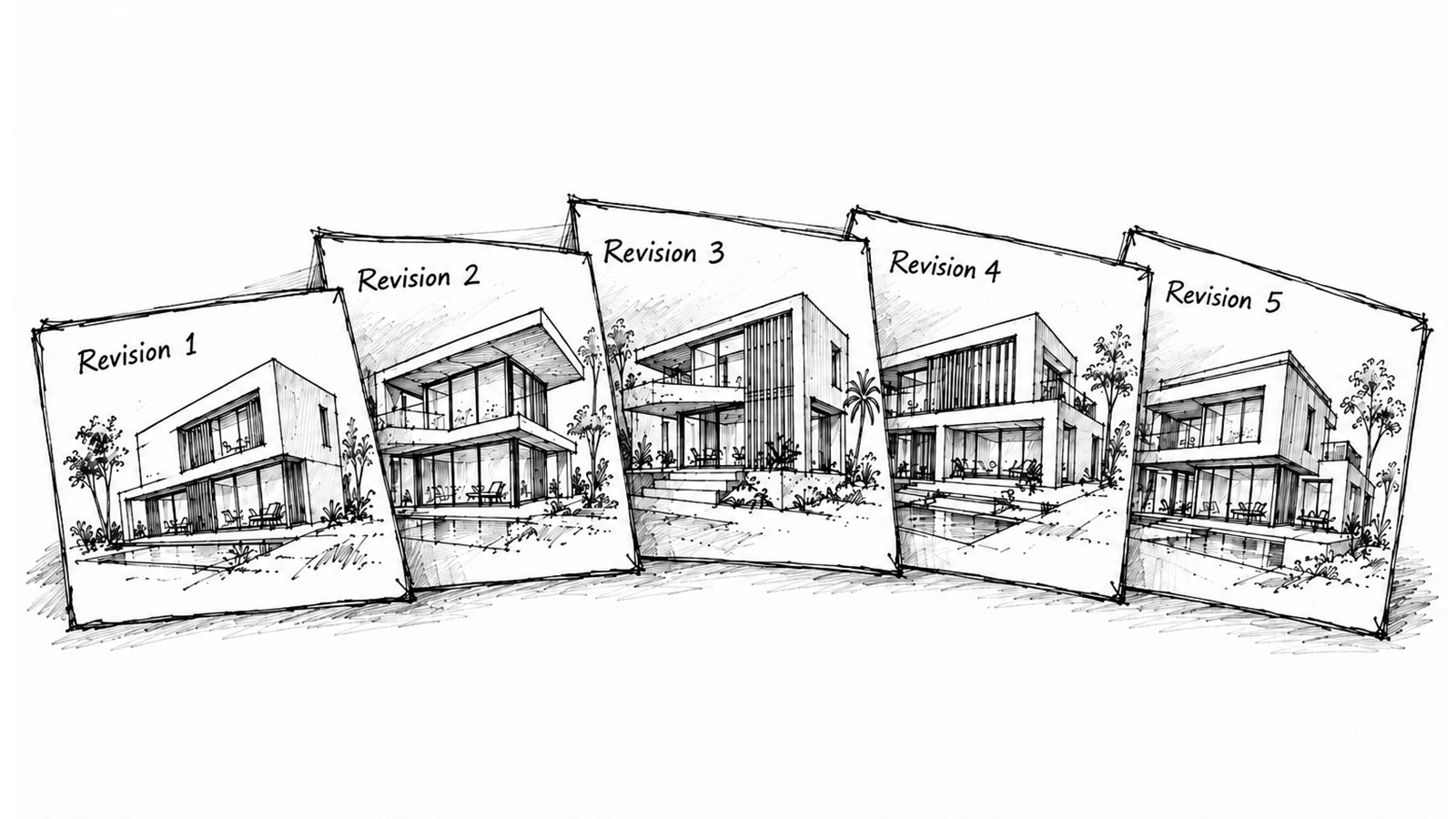
Five unpaid revisions. Same fee. It is a short description of a familiar problem: the drawings keep changing, but the agreement about the work stays still. For an architecture studio, the impact reaches beyond the time spent adjusting a plan.
Client management for architects includes making expectations, decisions and changes understandable to both sides. A good working relationship needs room for design development. It also needs a shared understanding of when a request changes the work originally agreed.
When design development becomes additional work
A client asking for another option is not necessarily being unreasonable. They may be seeing the implications of a decision for the first time. The studio may also need to refine an idea or correct something it has missed.
The difficulty starts when different kinds of revision are treated as if they were identical. Developing an agreed concept, correcting an error and reopening an approved direction are different activities. Without that distinction, extra work can become invisible.
In an interior design practice, the change might involve revisiting an entire material selection. In landscape architecture, it could mean redesigning planting after a previously agreed layout changes. The drawing is only the visible part of the response.
Why small requests affect the whole studio
One revised plan may require another team discussion, updated information for a consultant and a new presentation. Several modest requests can therefore interrupt work on other projects.
The original fee now has to cover more hours. Meanwhile, the team still has the same working week. Project profitability and studio capacity become connected through a conversation that initially seemed purely about design.
Resentment can grow on both sides when this remains unspoken. The studio feels that it is giving away time. The client may believe every revision is included because nobody has explained otherwise.
A clearer conversation before the next revision
Consider a client who wants to reopen a layout after approving it. The useful discussion is about what the change involves: which drawings need updating, which decisions depend on them and how the programme may shift.
There may be several workable responses. The team could exchange one planned task for another, agree a smaller change or discuss additional scope and compensation. The point is to make the choice visible before the work proceeds.
Clear communication also protects design quality. When the available time is understood, both sides can decide where another iteration would add the most value.
Turning a familiar tension into a game decision
This is the kind of business tension that informs Architect High Level. An educational game for architects should make room for choices where client satisfaction, workload and commercial outcomes pull in different directions.
The interesting question is not whether every request should be rejected or accepted. It is how a studio responds while understanding the consequences for its wider practice.
That makes client management a useful subject for learning business through play: a small conversation can influence several later decisions.
Architect High Level is being developed for architecture, interior design and landscape architecture studios. Follow the development and register your interest in early testing at Architect High Level.