An Educational Game for Architects: Learning Through Project Decisions
Learning through decisions
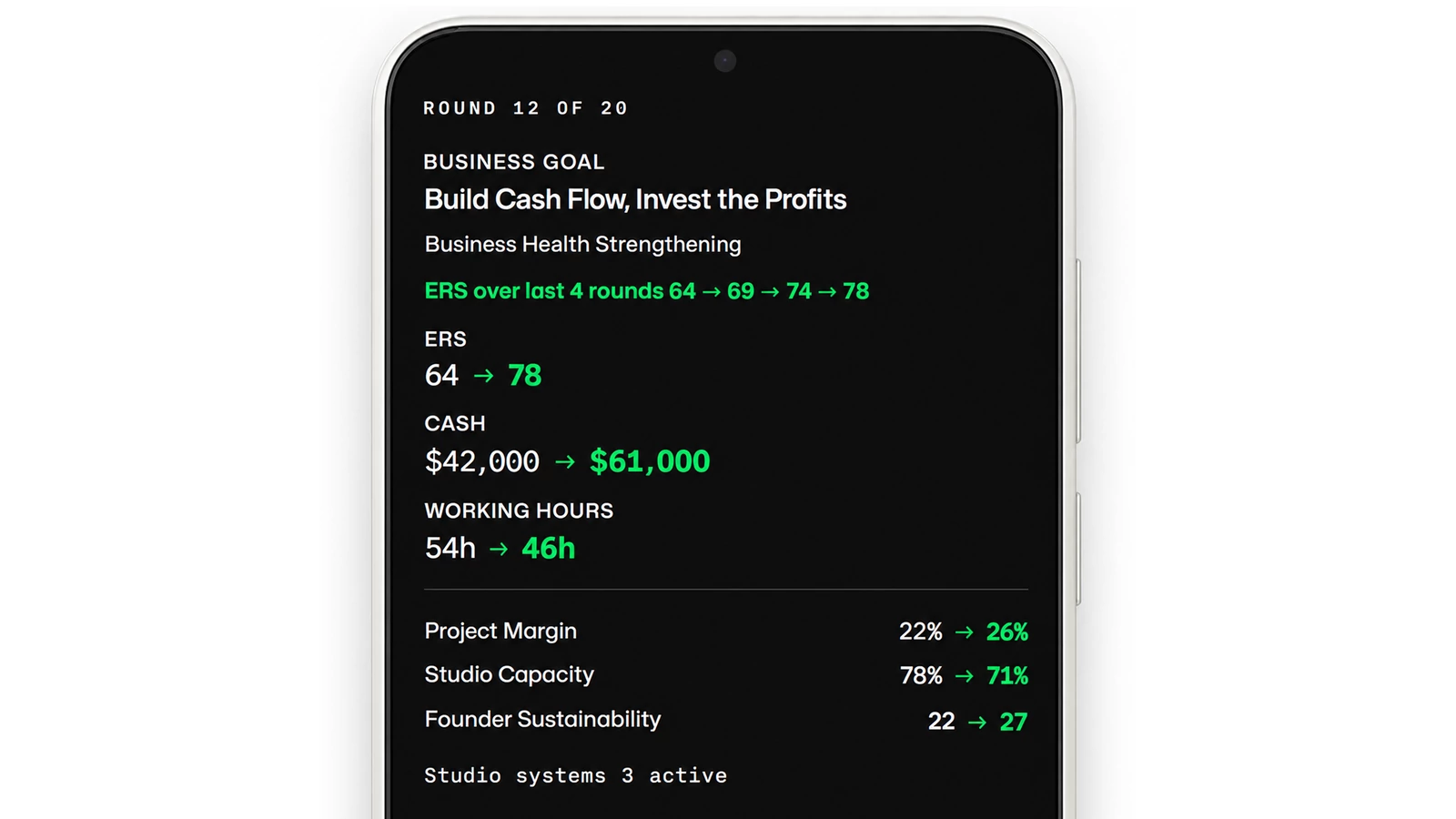
What happens when an architecture project earns a higher fee? The answer should involve more than one number on a screen. Workload, margin and the overall project outcome need to respond in ways that make sense. That relationship is what I am currently testing in the Core Engine of Architect High Level.
I want to create an educational game for architects that makes business decisions tangible. Before adding more complexity, I need to check whether the underlying numbers tell a coherent story. If the feedback is confusing, the learning experience will be confusing too.
Why a simulation needs credible feedback
Imagine comparing two project scenarios. One offers a higher fee but also requires additional work. Another brings in less revenue while demanding fewer resources. Which is the better choice? You cannot answer that question by looking at the fee alone.
This is the kind of question that interests me when developing a business simulation game. The aim is to connect a decision with its consequences, so players can examine tradeoffs instead of simply chasing the largest number.
For game-based learning, that connection is central to the experience I want to build. A result should invite useful questions: What changed? Why did it change? What would I try differently next time?
Testing the numbers before expanding the game
Right now, development is focused on how Project Metrics react to decisions in the Core Engine. I am checking whether changes to fees produce sensible responses across workload, margin and project outcome.
These tests are not a claim that every relationship is already correct. They are part of finding inconsistencies and improving the model. An architecture management game needs understandable rules, particularly when it represents situations that practising architects recognise.
The challenge is deciding what to simplify while keeping the business logic meaningful. A simulation cannot reproduce every detail of a real practice. It can, however, be designed around clearly defined relationships that players can explore.
An educational game with a practical purpose
Architecture education involves developing design judgement. My interest here is in creating a complementary space for exploring the business questions around that work: how projects use capacity, how fees relate to effort, and how individual choices shape the wider studio.
The intended experience is active: make a choice, inspect the outcome and reconsider the next decision. This approach gives the learning game a specific purpose beyond entertainment, while keeping experimentation at its centre.
Architect High Level is still in development. I am sharing these tests because the foundations matter. Before the game can offer a convincing learning experience, its numbers need to support the decisions it asks players to make. That requires careful testing, clear feedback and ongoing refinement.
If you are interested in educational games for architects and learning through simulation, visit Architect High Level and register for early access to follow the development.
Built for architects running an architecture studio, interior design practice or landscape architecture studio, where the design business has to work too.