Project Capacity for Architects: When Is One More Project Too Much?
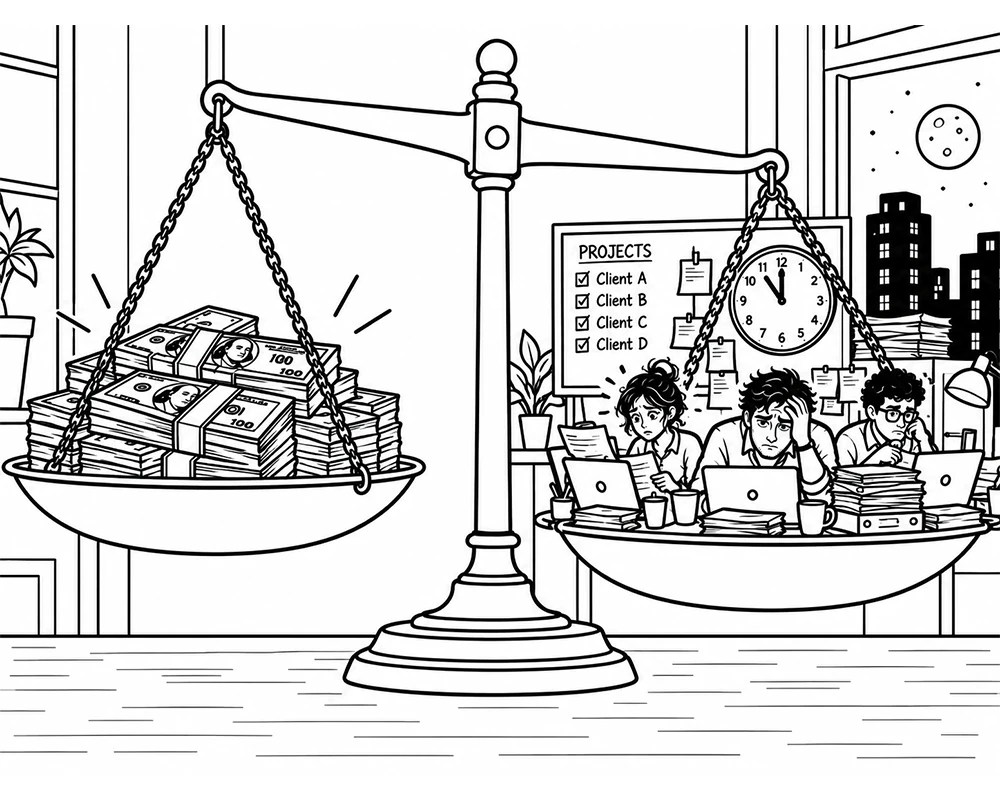
A promising enquiry arrives while the studio is already busy. The project looks interesting, the client seems serious, and the potential fee is attractive. Accepting it feels like progress. Yet the real question is not simply whether the studio wants the work. It is whether the studio can deliver it alongside everything already promised.
Project capacity for architects means the time, attention and skills available to complete active work. A new commission can increase potential revenue while reducing the room available for coordination, unexpected revisions and the next important decision.
A full schedule is not the whole picture
Two architecture studios can have the same number of projects and very different workloads. One may be developing early concepts while another faces several detailed submissions at once. Counting commissions alone does not explain how much pressure the team is carrying.
The same applies to an interior design practice coordinating selections and suppliers, or a landscape architecture studio balancing design work with site visits. Project stages matter. So do the people needed to move each stage forward.
Even when drawing time appears available, the person responsible for reviews may already be fully occupied. Adding another project can therefore create a bottleneck without filling every desk.
The same project, a different decision
Imagine a small studio considering a commission that fits its portfolio. With an available team and a flexible programme, accepting it may be sensible. With overlapping deadlines and an exhausted principal, the same commission creates a different problem.
The fee has not changed. The design opportunity has not changed. What has changed is the studio's ability to absorb the work.
This is why studio management cannot treat project selection as an isolated yes or no question. Timing connects a new opportunity to existing commitments. A later start, a narrower scope or a decision to decline can each change what happens next.
Making capacity meaningful in a business simulation
This relationship is one of the design questions behind Architect High Level. I am working on how active projects, working hours and studio capacity should influence later decisions.
The challenge is to make the consequences understandable without reducing an architecture practice to a spreadsheet. More work should feel attractive for a reason. The pressure it creates should also be visible enough for players to recognise the tradeoff.
An educational game becomes more interesting when an apparently good opportunity depends on context. The aim is to create decisions worth reconsidering, rather than reward accepting every available project.
Learning to look beyond the next commission
A useful question is: what would this project displace? It might take time from an existing client, a team review, business development or the owner's recovery.
That question changes the meaning of growth. A stronger design business needs enough room to deliver its promises, not simply a longer list of commissions.
Architect High Level explores these connections through the development of a business simulation for architects, interior designers and landscape architects. Follow the development and register your interest in early testing at Architect High Level.